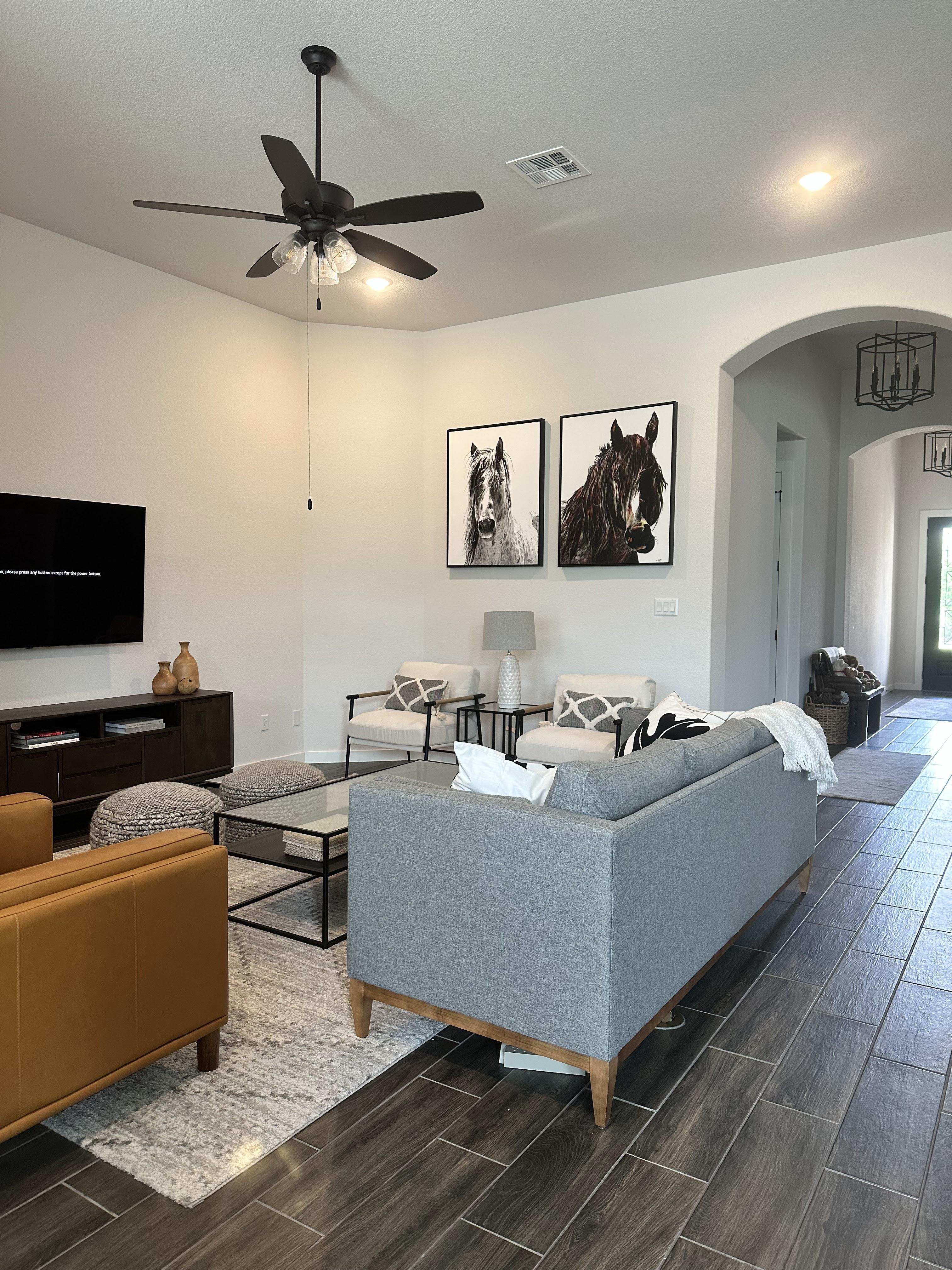
How High Should You Hang Art? A Gallery’s Guide to Getting It Right
You found the piece. You had it framed. Now comes the part that somehow causes more second-guessing than expected:
How high should you actually hang it?
Too high and the artwork feels disconnected from the room. Too low and it can make the entire wall feel off. The good news is that there are a few reliable guidelines that make hanging art much easier.
At Create Gallery & Frames, we work with art every day, from custom framing to in-home installation. Here are the measurements and rules we use as a starting point.
Start With the 57-Inch Rule
For artwork hanging on an open wall, a common gallery guideline is to place the center of the artwork approximately 57 inches from the floor.
Why 57 inches?
It lands close to average eye level and creates a comfortable viewing height for most people. Museums and galleries often use a similar center-point approach because it keeps artwork visually consistent throughout a space.
The important part is this:
Measure to the center of the entire framed piece, not the top of the frame.
For example, if your framed artwork is 30 inches tall, the center is 15 inches from the top.
You would start at 57 inches from the floor, then account for the distance between the hanging hardware and the top of the frame.
That gives you the actual nail or hook placement.
Hanging Art Above a Sofa or Console Table
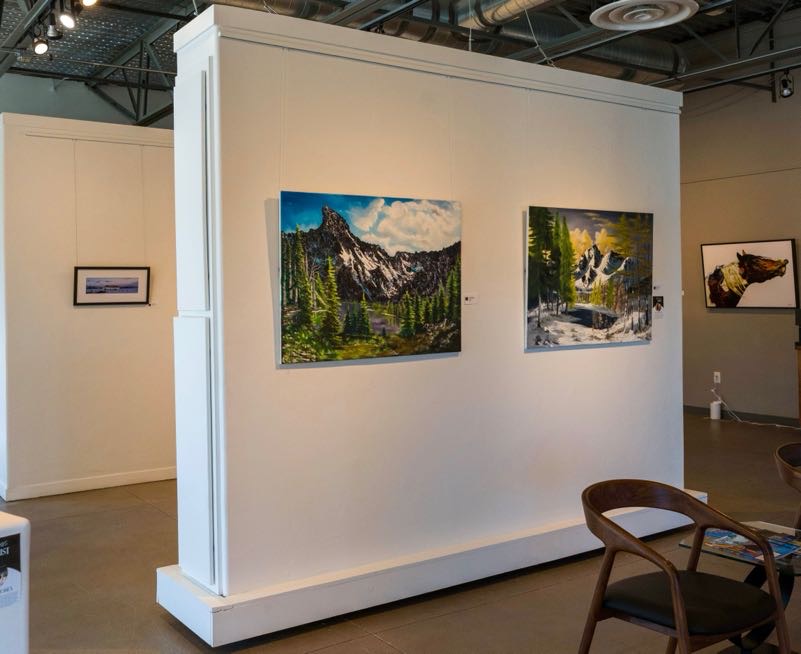
When artwork hangs above furniture, the furniture becomes part of the composition.
In this case, you may need to ignore the 57-inch rule slightly and focus more on the relationship between the artwork and what sits below it.
A good starting point is to leave approximately 6 to 10 inches between the bottom of the artwork and the top of the furniture.
If the gap is much larger, the art can start to feel like it is floating above the room instead of belonging to it.
Scale matters too.
As a general visual guideline, artwork or a grouping of artwork often looks best when it spans roughly two-thirds the width of the furniture beneath it.
That does not need to be exact, but it is a useful place to start.
A very small frame above a large sofa can look lost. A piece nearly as wide as the sofa can sometimes feel too heavy.
Balance is the goal.
What About Large Artwork?
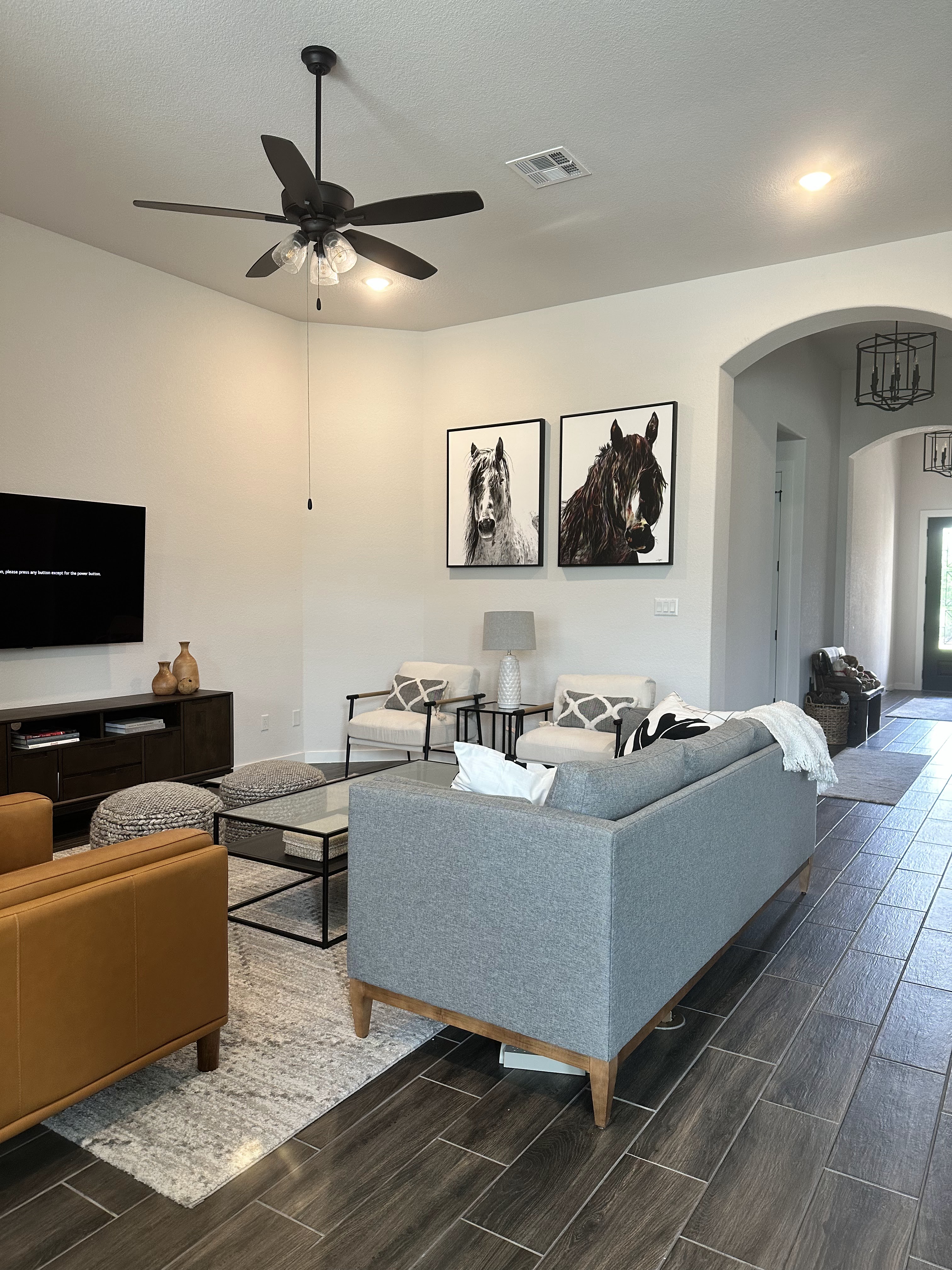
Large artwork usually benefits from a slightly different approach.
The instinct is often to hang a large piece higher because of its size. Usually, the opposite works better.
Keep the center of the piece near eye level whenever possible.
A large painting hung too high can make a room feel top-heavy and create an awkward amount of empty wall beneath it.
Large-scale art is meant to have presence. Let it occupy the wall rather than pushing it toward the ceiling.
If you have tall ceilings, this becomes especially important.
High ceilings do not automatically mean your artwork should be hung higher.
You are decorating for the people standing in the room, not the ceiling.
How Far Apart Should Gallery Wall Pieces Be?
Gallery walls look effortless when they are done well.
They are rarely effortless.
Spacing is one of the biggest differences between a gallery wall that feels intentional and one that feels scattered.
A good starting point is approximately 2 to 3 inches between frames.
Smaller gaps create a more unified composition. Larger gaps can work, but once pieces get too far apart, they begin to look like individual objects instead of one installation.
Before putting holes in the wall, lay your arrangement out on the floor.
Start with the largest or most important piece, then build outward.
You can also trace the frames onto paper and tape the paper templates to the wall first.
It is much easier to move paper than patch six unnecessary nail holes.
Should Every Piece in a Room Hang at the Same Height?
No.
The goal is not to create a perfectly straight line around the entire room.
Instead, think about visual relationships.
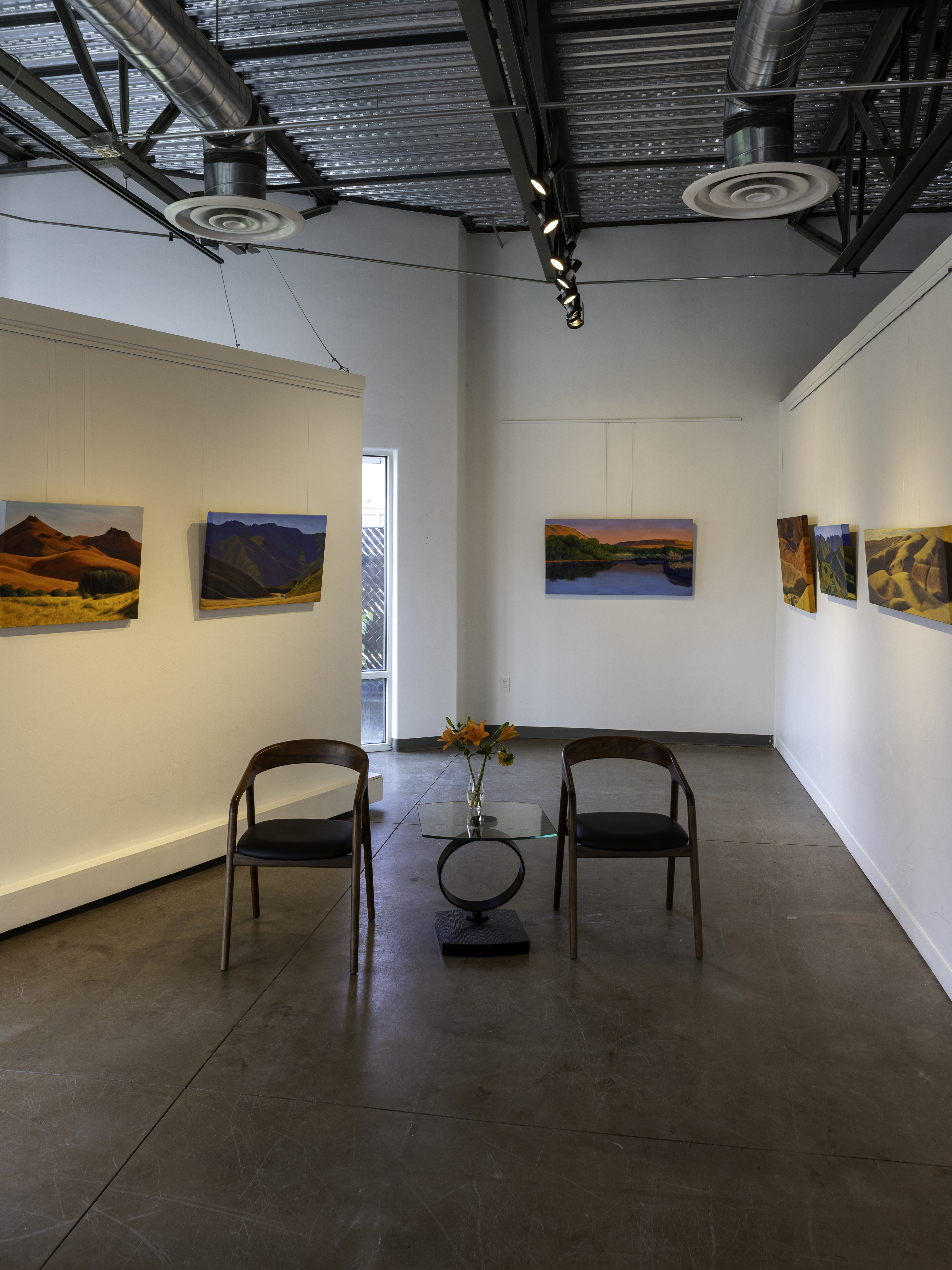
Artwork hanging alone on an open wall may follow the 57-inch guideline closely.
Artwork above a sofa may sit slightly differently.
A tall vertical piece may require another adjustment.
What should remain consistent is the feeling of the room.
When you walk through the space, the artwork should feel connected instead of jumping noticeably up and down from wall to wall.
Common Art-Hanging Mistakes
Hanging Everything Too High
This is probably the most common mistake.
If you have to noticeably look upward to view the artwork, it is probably too high.
Artwork should generally feel like it is part of your living space, not like it is trying to escape toward the ceiling.
Leaving Too Much Space Above Furniture
A large gap between furniture and artwork disconnects the two visually.
Bring the artwork closer to the furniture so they read as one composition.
Choosing Artwork That Is Too Small for the Wall
Sometimes the hanging height is not actually the problem.
The scale is.
A small piece floating in the center of a large blank wall may still look wrong even when it is technically hung at the correct height.
Consider a larger piece, a grouping, or a wider frame treatment.
Ignoring the Frame
The frame is part of the final dimensions.
Always make your measurements using the outside dimensions of the framed artwork, not the artwork itself.
A wide mat and frame can significantly change the scale of a piece.
Hanging First and Measuring Later
We understand the temptation.
You hold the piece up. Someone across the room says, "A little higher."
Then, somehow, there are four holes in the wall.
Measure first.
Your drywall will appreciate the planning.
When Should You Break the Rules?
Almost every design rule has exceptions.
A salon-style gallery wall, dramatic floor-to-ceiling installation, architectural feature, staircase, or unusually shaped room may require completely different placement.
Some artwork simply looks better slightly higher or lower depending on its composition and scale.
Use the measurements in this guide as a starting point, not an absolute law.
The final test is simple:
Does the artwork feel connected to the room when you stand back and look at it?
If yes, you are probably in the right place.
The Frame and Placement Work Together
How artwork is framed and how it is installed are two parts of the same decision.
A wider mat can give a smaller piece more presence.
A substantial frame may help artwork hold its own on a large wall.
The right proportions can completely change how a piece feels once it is installed.
That is why we consider more than just the artwork itself when helping clients choose custom framing.
We look at scale, proportions, materials, placement, and how the finished piece will live in the space.
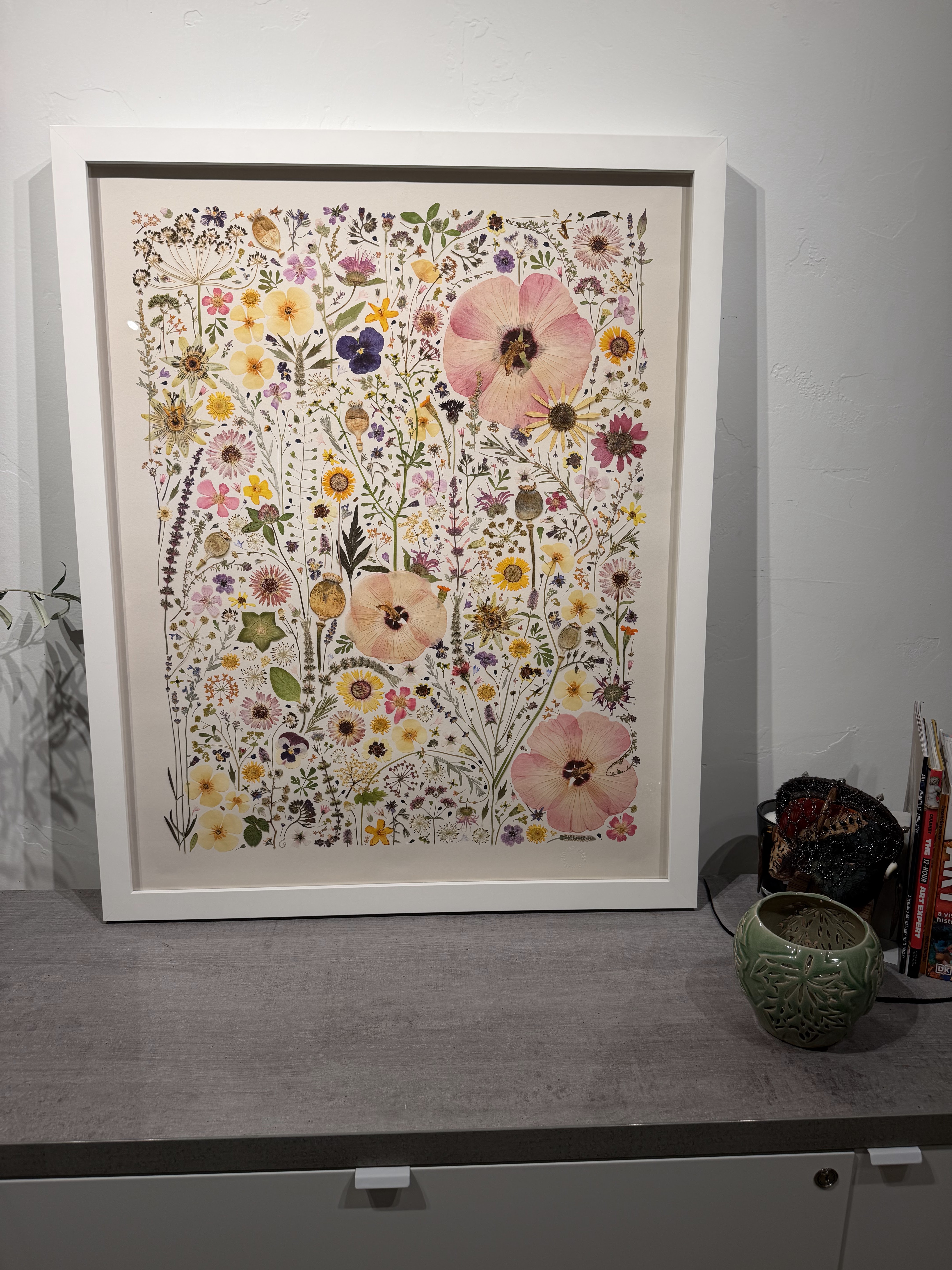
Need Help Hanging Your Artwork?
Sometimes the easiest solution is to have someone else do the measuring.
Create Gallery & Frames offers custom framing and in-home art installation for clients throughout the Boise and Garden City area.
Whether you are hanging one important piece, arranging a gallery wall, or trying to finish an entire room, we can help make sure the artwork is framed, scaled, and installed with intention.
Visit us at:
Create Gallery & Frames
3520 W Chinden Blvd
Garden City, Idaho 83714
Tuesday-Saturday | 11 AM-6 PM
Stop by the gallery to explore original artwork, talk custom framing, or ask us where that frame should actually go.
Because sometimes "a little higher" is exactly how the trouble starts.
