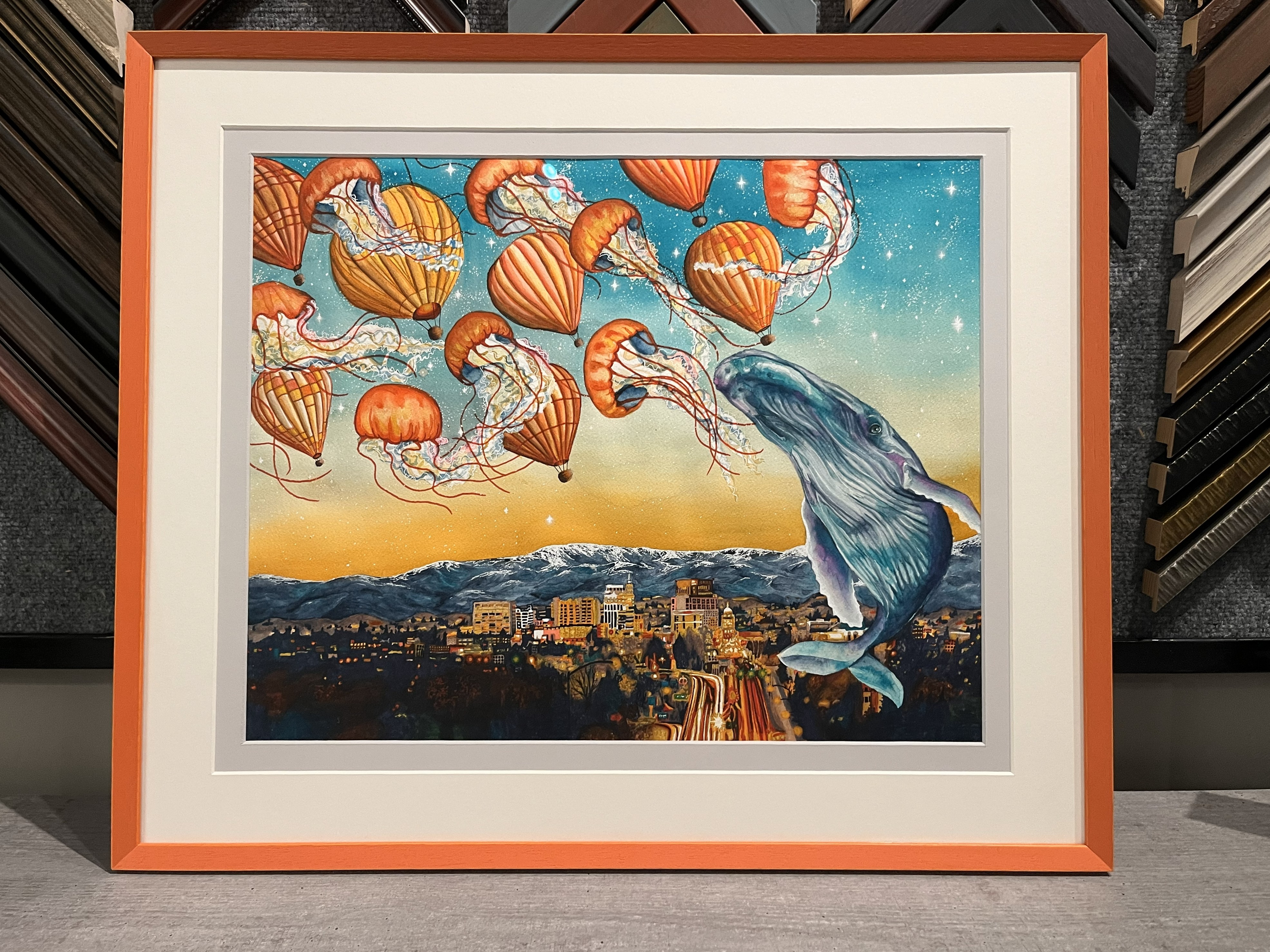
Museum Glass vs. Conservation Glass: Which Is Best for Your Artwork?
Museum Glass vs. Conservation Glass: Which Is Best for Your Artwork?

Choosing the right framing glass can make a significant difference in both the appearance and long-term preservation of your artwork. Here's how Museum Glass and Conservation Glass compare.
Not All Glass Is Created Equal
When people think about custom framing, they often focus on the frame itself. But one of the most important decisions is actually the glass protecting your artwork.
At Create Gallery & Frames, one of the questions we're asked most often is:
"What's the difference between Museum Glass and Conservation Glass?"
The answer is simpler than many people expect. Both options provide excellent protection for your artwork, but they're designed to do slightly different things. Understanding those differences can help you choose the best option for your artwork, your home, and your budget.

See the Difference
One of the easiest ways to understand the difference between Conservation Glass and Museum Glass is to compare them side by side.
Both glazing options provide 99% UV protection, helping preserve artwork from fading over time. The biggest difference isn't protection, it's clarity.
The display above compares the same object behind each type of glass. Conservation Glass offers excellent archival protection with the appearance of traditional picture glass, while Museum Glass dramatically reduces reflections, allowing you to focus on the artwork instead of everything reflected around it.
Now let's take a closer look at each option.
What Is Conservation Glass?
Conservation Glass is designed to help protect artwork from one of its biggest threats: ultraviolet (UV) light.
Over time, sunlight and even indoor lighting can cause photographs, prints, watercolors, and other artwork to fade. Conservation Glass blocks approximately 99% of harmful UV rays, helping preserve color and detail for years to come.
While Conservation Glass offers excellent UV protection, it retains the familiar reflective appearance of traditional picture glass.
It's an excellent choice for:
Family photographs
Limited edition prints
Certificates and diplomas
Artwork displayed in lower-light areas
Anyone wanting archival protection at a more affordable price point

What Makes Museum Glass Different?
Museum Glass offers the same outstanding UV protection while dramatically reducing reflections.
Its specialized coating allows you to see more of the artwork and less of everything reflected around it. Colors appear richer, details become more visible, and viewers can appreciate the piece without distractions.
Many people are surprised by how little reflection Museum Glass produces, making it easier to appreciate the artwork without visual distractions.
Museum Glass is especially popular for:
Original paintings
Fine art photography
Valuable artwork
Pieces displayed near windows
Artwork in rooms with lots of lighting

Which One Should You Choose?
There isn't a universal "best" option. The right choice depends on the artwork and where it will be displayed.
Conservation Glass offers excellent archival protection and is a fantastic option for many framing projects.
Museum Glass provides the highest level of clarity while still protecting your artwork, making it a favorite for original artwork and pieces you want to experience without distracting reflections.
During your framing consultation, we'll help you compare both options in person so you can see the difference for yourself.

Protect What Matters Most
Whether you're framing an original painting, a family heirloom, a cherished photograph, or a meaningful keepsake, the right materials help preserve it for years to come.
At Create Gallery & Frames, we take the time to understand every project and recommend the framing materials that best protect and showcase your artwork. Whether you're preserving a family heirloom, displaying original art, or framing a meaningful keepsake, we're here to help you make the right choice.
If you're unsure which glazing option is right for your project, stop by the gallery. We'd be happy to show you the difference in person.
